This article is an addition to our Bible read-along. I will try to provide more in-depth details on the important characters mentioned in the various Bible books. If you have joined the read-along a bit later, you can check the schedule and find all previous posts here.
Genesis
Adam & Eve
The first humans created by God. Eve ignored the prohibition that God had given them, ate the apple of knowledge, and gave Adam knowledge too. After this, they were both cursed and expelled from the Garden of Eden.
Cain & Abel
The first two sons of Adam and Eve. Cain committed the first murder, one of the worst kinds; he killed his brother out of jealousy. God had preferred Abel’s offering over Cain’s, which caused hate and jealousy in Cain.
Enoch
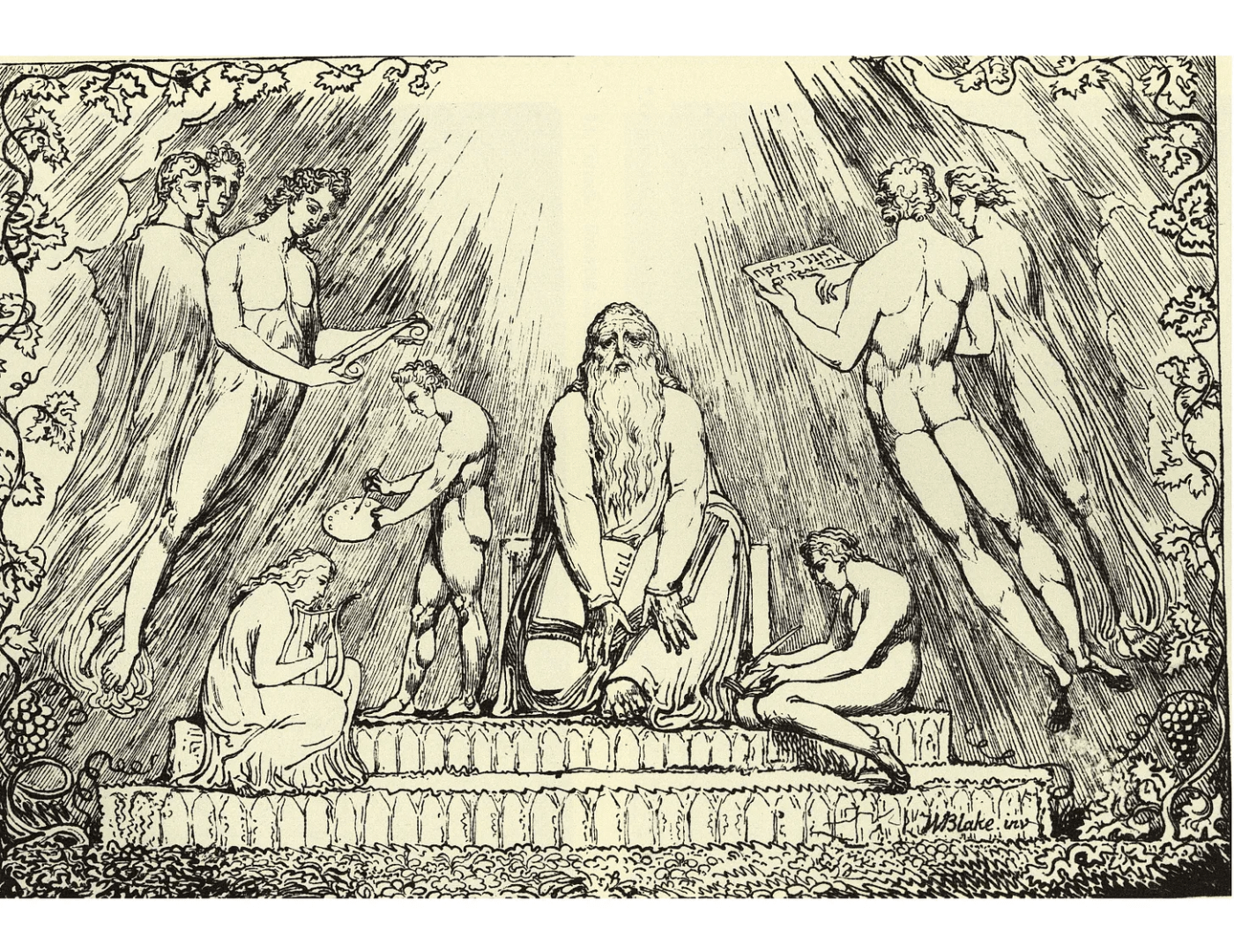
One of the patriarchs before the flood (Antediluvian period). Son of Jared and father of Methuselah. He lived for 365 years and then he ”walked with God”. He did not die like the other patriarchs but was summoned by God himself. Some pseudo-apocryphal books are written in his name: The Books of Enoch.
Nephilim (6:1-4)
These are the Giants. ‘’Mighty men of renown’’. Born through the union of sons of God (bene elohim) and daughters of men. The word Nephilim is not mentioned in the King James version, but in some other translations, that is how the Giants are called. Their corruption and violence are seen as one of the reasons for the Great Flood.
“The earth also was corrupt before God, and the earth was filled with violence”. (6:11)
For me, the Giants are the most interesting aspect of Genesis. I wish that the text told more about their origin. They are only briefly and vaguely mentioned in Chapter 6. Other biblical texts also mention them: the Books of Enoch, Jubilees, Genesis Apocryphon (Tales of the Patriarchs), Baruch, the Damascus Document, and Daniel. Furthermore, there is also the Book of Giants. This one is similar to the Books of Enoch.
I like to dive deeper into this subject, so I will try to add the apocryphal books to this read-along and find additional literature on the Giants.
The ‘’sons of God’’ is another mysterious concept. There is no clear answer on who they should represent. An interesting thesis by J.J.T. Doedens is written on this subject (see references). There are four possibilities, they are either:
- Gods themselves
- Angels
- Sons of rulers (virtuous) and daughters of men (wicked)
- Sons of Seth (Sethites), making the daughters of men the daughters of Cain
Most evidence points towards the first interpretation. The sons of God are other divine beings, other Near East worshipped Gods. That’s how I had interpreted this passage too. Such a concept is found in various mythologies, for example, demi-gods. Think of Hercules, son of Zeus and a mortal woman (Alcmene).
Nimrod
It is unclear from the Bible if Nimrod was one of the Giants. He is mentioned in 10:8 as the son of Cush (Cush is the son of Ham, a grandchild of Noah) and described as a mighty huntsman and the king of Babel (Babylon). In Dante’s Inferno, though, he is described as one of the giants in the lower parts of hell. It is believed that he built the Tower of Babel to rebel against God. For this reason, he and the other Giants who rebelled with him are put in the lower part of hell. There, he is not able to speak in coherent language, so no one understands him.
It was supposed that the Great Flood would eradicate all life (except that of Noah and his descendants), resulting in the death of the Giants. But it may be that some Giants remain even after the flood. Other texts will also mention some Giant-like characters.
Cherubims
Their appearance is described in another book, Ezekiel. They have four faces (lion, ox, human, eagle) and eyes all over their body and wings. They could see everything without the need to turn around. Their purpose and tasks are described differently over the three Abrahamic religions and various texts. But in Genesis, they have to guard the entrance into Eden.
“So he drove out the man, and he placed at the east of the garden of Eden Cherubims, and a flaming sword which turned every way, to keep the way of the tree of life”. (3:24).
Exodus
Moses
The one who leads the sons of Israel out of Egypt into the promised land. He has two sons with his wife Zipporah: Gershom and Eliezer. There is a controversy around his relationship with Zipporah; some claim that he also had another wife. She was a Cushite princess called Tharbis (ancient Ethiopia, modern-day Sudan) whom he married before Zipporah. This is not accepted as a fact, but claimed by Josephus (a Roman-Jewish historian).
Aaron
He is Moses’ older brother and was eventually appointed by God as a high priest. He and his sons (and future generations) are responsible for worshipping God and serving in the Tabernacle.
Miriam
The older sister of Moses and Aaron. She is a prophetess and an important figure in the Talmud; one of the seven female prophets of Israel.
Joshua
Originally called Hoshea, he was the son of Nun from the tribe of Ephraim. He becomes Moses’ assistant and eventually the leader of the Israelites after Moses.
Pharaoh
A pharaoh is the name of the ruler in ancient Egypt. The new pharaoh in Exodus is not mentioned by name, but there are speculations that it could be Ramesses II (Ramesses the Great). He was the ruler of Egypt during the nineteenth dynasty. He has many building aspirations and uses servants to create his projects. This fits the narrative of Exodus.
Destroying Angel
God tells Moses that he will send the destroyer (mashḥit) during the Passover night to kill every firstborn. It is not clear who this should be. It may be an angel of God, an angel of death, or God himself. Destroying angels are also called memitim.
Thomas Mann speculates in The Tables of the Law that it is actually Joshua who is the destroyer.
The Golden Calf
The Golden Calf is a created idol by Aaron for the Israelites because they asked him for a new God after Moses disappeared. Aaron instructs his people to gather all their gold and makes them a golden calf to worship. Later, the Israelites are punished severely for this transgression.
At first, it seems like the calf is just a created idol without deeper meaning, but this is not the case. Various cultures during those times worshipped sacred bulls. In fact, a major deity in Egypt (the place that the Israelites just left) had such a God named Ptah, the bull called Apis was an incarnation of his spirit. So maybe the people that Moses ‘’saved” lacked guidance and decided to return to another known God to them.
The Canaanites also worshipped a sacred bull. Some scholars believe that the Israelites and the Canaanites are the same people, so they should have been familiar with this deity as well.
Leviticus
Nadab and Abihu
In Chapter 10, something strange happens all of a sudden. Two sons of Aaron, Nadab and Abihu, are tasked with performing ceremonial rituals in the Tabernacle; however, something goes wrong with their incense sacrifice.
“Ans Nadab and Abihu, the sons of Aaron, took either of them his censer, and put fire therein, and put incense thereon, and offered strange fire before the Lord, which he commanded them not. And there went out fire from the Lord, and devoured them, and they died before the Lord. Then Moses said unto Aaron, This is it that the Lord spake, saying, I will be sanctified in them that come nigh me, and before all the people I will be glorified. And Aaron held his peace.” (Leviticus 10:1-3).
There is no more explanation than this short passage, so various theories are dedicated to explaining this event. Since various rituals and ways of bringing an offering were complex and described in detail by Moses, it may be that the offering of this incense was committed in the wrong way. Some suggest that their thoughts during the offering process were not holy or right. Maybe they were worshipping other Gods and were rebellious in thought against Yahweh. There is a theory that claims that they were drunk during the offering, because a following passage prohibits the drinking of alcohol in the Tabernacle. I even found a theory that suggested the death by fire was not a punishment but a ‘’divine kiss’’, the sons were taken by God (just like Enoch was) because they were serving him so well. But this theory seems to me the least likely one.
It remains unclear what exactly is meant by this passage, but it suggests that even small errors are not tolerated, especially from people in high positions. Aaron and the others were not allowed to mourn, and since priests were prohibited from touching the dead and being involved with burials, it seems that Aaron could not even give his sons a proper resting place. The bodies were taken out of the camp.
Azazel
Azazel is not mentioned in the King James translation; however, this fallen angel or demon is related to the scapegoat tradition during the Day of Atonement. Again, like with many aspects of the Bible, there is no consensus on who or what Azazel was. It may just mean ‘’scapegoat’’ itself or something being ‘’sent away’’, as a translation from old Hebrew. But new translations also suggest that it is the name of a demon or a place. Azazel may be a place in the desert to which the scapegoat was sent. The Books of Enoch speak of Azazel as a fallen angel, a former Watcher (Grigori). The one who rebelled against God, descended to earth and started learning humans the sacred and forbidden knowledge of war and deceit, and impregnating human women, resulting in the Nephilim. Yahweh then sends Raphael to bind Azazel and cast him into a pit in the desert (Dudael).
Moloch
Moloch, usually portrayed as a bull-headed God, was a deity in Canaanite and Phoenician traditions. He required human sacrifices, to be specific, the sacrifice of an infant or a child.
‘’And thou shalt not let any of thy seed pass through the fire to Moloch, neither shalt thou profane the name of thy God: I am the Lord.’’ (Leviticus 18:21)
Again, the sources on the origin of Moloch seem to be an unending rabbit hole. The Carthaginians (Phoenician empire) did indeed sacrifice children by burning them for their God Baal. Moloch is sometimes interpreted as not a deity himself but a name for this type of sacrifice to Baal. These theories are controversial, and there is still not enough evidence on the existence of these sacrifices and the purposes behind them.
In his retelling of Genesis through an epic poem, John Milton (Paradise Lost) describes Moloch as a horrid king who is besmeared with the blood of children and the tears of their parents. A horrible picture to imagine.
“First, Moloch, horrid king, besmeared with blood
Of human sacrifice, and parents’ tears;
Though, for the noise of drums and timbrels loud,
Their children’s cries unheard that passed through fire”
Paradise Lost, John Milton
Numbers
Children of Anak
This is another reference to the giants or Nephilim, who were mentioned earlier in Genesis. It turns out that not all of the Nephilim were killed during the Great Flood; Anak survived and continued his gigantic descendants (Anakim). Three of them are mentioned in Numbers: Ahiman, Sheshai, and Talmai. They lived in the southern part of Canaan, near the city of Hebron, and were also part of the Rephaim.
Another giant is mentioned in Numbers, Og of Bashan, the Amorite king of Bashan. It is not clearly stated that he was a giant; however, in later books, he will be mentioned again as someone of great height and strength (’’tall as cedar trees’’ and ‘’the last giant of the Rephaites’’, Book of Amos).
‘’And the Lord said unto Moses, Fear him not: for I have delivered him into thy hand, and all his people, and his land; and thou shalt do to him as thou didst unto Sihon king of the Amorites, which dwelt at Heshbon. So they smote him, and his sons, and all his people, until there was none left him alive: and they possessed his land.’’ (Numbers 21:34-35)
In Deuteronomy, Joshua will slay the children of Anak, but some will remain in three cities (Gaza, Gath, and Ashdod). It is believed that the Giant Goliath from Gath, whom King David will fight, is one of the descendants.
Baal
The word Baal means lord or owner in the ancient Semitic languages. It was often attributed to various deities in Canaan (Palestina) and other nearby areas. El was the highest God; however, Baal had major influence due to being a storm God and thus responsible for rain and fertility. Another God who is usually associated with Baal and may be the earlier version of him is Hadad. Both had the bull as their symbol.
In Numbers, Baal-peor is mentioned. He is a deity of the Moabites. When the Israelites camped near Mount Peor, their man slept with Moabite women and were seduced to worship Baal-peor. This God is different from the other deity called Baal (Baal-shamem), who was worshipped by Canaanites and Phoenicians.
“And Israel abode in Shittim, and he people began to commit whoredom with the daughters of Moab. And they called the people unto the sacrifices of their gods: and the people did eat, and bowed down to their gods. And Israel joined himself unto Baal-peor: and the anger of the Lord was kindled against Israel” (Numbers 25:1-3)
An ancient text named The Cycle of Baal is a Ugaritic epic which was found in the 1920s in modern Syria, written on six clay tablets, unfortunetely it was incomplete due to destruction. In this epic, Baal fought with other Gods, for example, Yamm, the god of chaos and sea, and Mot, referring to death itself. Baal was sometimes named the rider of the clouds.
Some even see Baal as the precursor of Yahweh.
Christians started referring to Baal as Beelzebub (the Lord of Flies), resulting in new myths surrounding him. This is probably because the Israelites started mocking Baal by changing his name to Ba’al Zabub/ Baʿal-zəvuv of Ekron. Later, in Christianity, he became a demon, the prince of Hell, with legions serving him. Sometimes, even a synonym for Lucifer and Satan.
Unicorns
I was very surprised when I encountered the word “unicorn” in the Bible. This is the translation that King James’s version and some other versions use for the Hebrew word Re’em. As with so many mysterious creatures and figures we have encountered so far, it is unclear what re’em actually referred to. This animal is mentioned nine times in the Bible, and two of them are in Numbers.
“God brought them out of Egypt; he hath as it were the strength of an unicorn.” (Numbers 23:22)
In chapter 24, this passage is repeated to emphasise the strength of Yahweh again.
Re’em could refer to a wild ox or bull, a buffalo, or a rhinoceros. Others claim that it referred to aurochs, an extinct wild species of cattle. If there is a connection between Hadad, Baal, and Yahweh, then it would make sense to translate it as a wild bull, since the bull was a symbol for these three gods. It was also the symbol of El. Translating it as unicorn seems odd.
Deuteronomy
Sheol
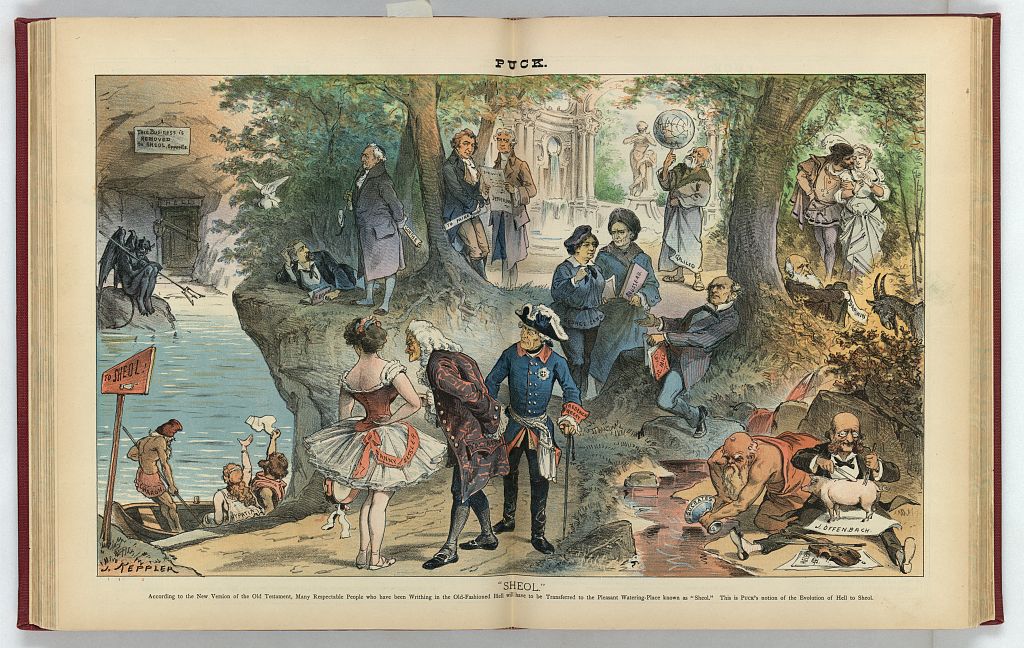
Sheol is translated as hell in the King James version. But this Hebrew term does not refer to a hell as Christians know it. Sheol has more resemblance to the Greek view of the underworld (Hades): a dark and shadowy place wherein all the dead dwell. There is no different destination for the righteous and true believers; everyone ends up in the same place. This concept changes later in Judaism with the introduction of a place for divine punishment of the wicked called Gehenna.
Sheol is mentioned multiple times throughout the Bible. In Deuteronomy, it serves as a description of the wrath of Yahweh.
“For a fire is kindled in mine anger, and shall burn unto the lowest hell, and shall consume the earth with her increase, and set on fire the foundations of the mountains.” (Deuteronomy 33:22)
Children of Belial
This term refers to the wicked or worthless people who offended Yahweh by their worship of other Gods. In other biblical texts, it refers to various specific characters, for example, the sons of Eli (Hophni and Phinehas).
“Certain men, the children of Belial, are gone out from among you, and have withdrawn the inhabitants if their city, saying, Let us go and serve other gods, which ye have not known.” (Deuteronomy 13:13)
Belial is later used by Christians as another term for Satan or the devil, but in Hebrew it means ‘’worthlessness”. In the Occult and Esoterica, Belial is seen as a demon. He is mentioned in The Lesser Key of Solomon, Crowley’s Goetia, and in LaVey’s Satanic Bible.
Giants (Emims & Zamzummims)
Back to the giants again. In Deuteronomy, there is once more mention of the giants, but they are called by different names here. The text explains a bit about the various names; however, it is not clear whether it was different tribes of giants or different regions that had other names for them.
“The Emims dwelt therein in times past, a people great, and many, and tall, as the Anakims; Which also were accounted giants, as the Anakims; but the Moabites call them Emims.” (Deuteronomy 2:10-11)
The Israelites are warned not to fight with the Moabites since Yahweh will not give them that land. The same applies to the Edomites (people of Esau) and later also to the children of Ammon. The area of the Ammonites had giants, too.
“That also was accounted a land of giants: giants dwelt therein in old time; and the Ammonites call them Zamzummims.” (Deuteronomy 2:20)
References
- The Authorized King James Bible, Oxford University Press
- A History of the Bible by John Barton, Penguin Classics edition
- The Oxford Illustrated Companion to the Bible by Bruce M. Metzger & Michael D. Coogan
- The Divine Comedy by Dante Alighieri, Everyman’s Library edition
- Paradise Lost by John Milton
- The Tables of the Law by Thomas Mann
- The Penguin Book of Demons by Scott G. Bruce
- Demons & Demonology by Rosemary Ellen Guiley
- GIANTS IN THE LAND: A BIBLICAL THEOLOGY OF THE NEPHILIM, ANAKIM, REPHAIM (AND GOLIATH) by Zachary Garris
- Wikipedia



Discover more from MariaTheMillennial
Subscribe to get the latest posts sent to your email.
 MariaTheMillennial