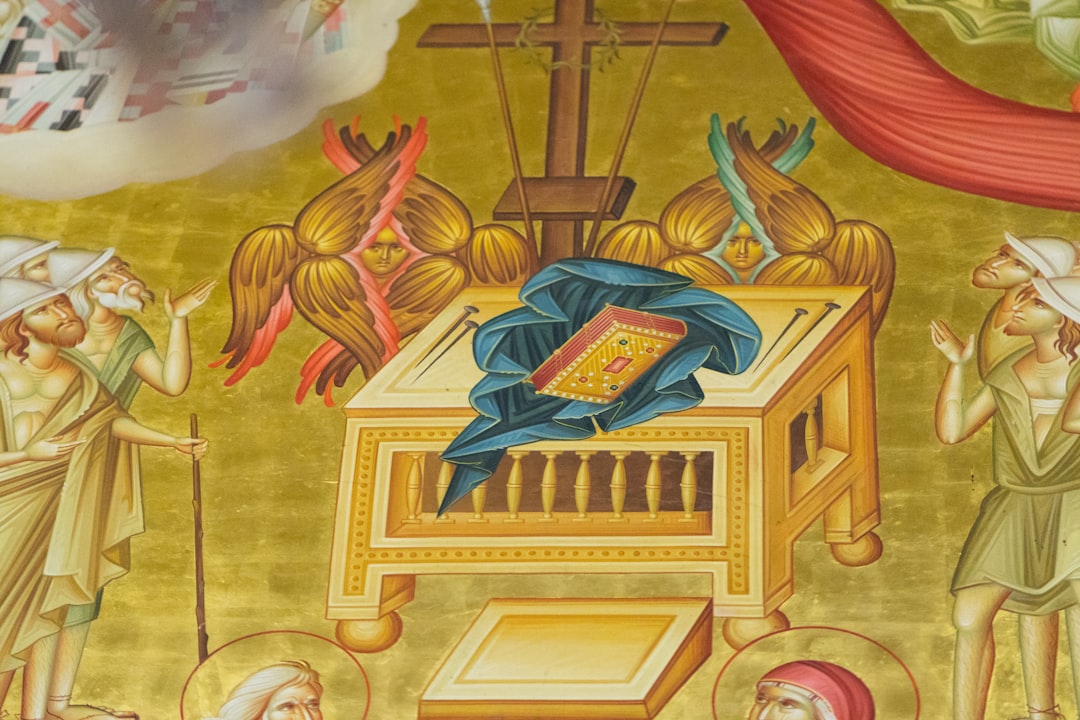
A bit late, but here we are—the third book of the Pentateuch or the third book of Moses: Leviticus. I hope you had an interesting reading experience and are now continuing the read-along with Numbers. But let’s dive into my notes on Leviticus.
Leviticus (Wayiqra)
The title of this book relates to the Levi tribe of the ancient Israelites. The importance of the Levi tribe was probably due to the role Moses and his brother Aaron played in constructing the Tabernacle and writing down the first laws. We have already gone through all the detailed instructions from God on how to build the worship place in Exodus. But now in Leviticus, the details on the worship itself will play the central role. The strict rules for sacrifices, offerings, worship, and living together are presented in this book.
To be completely honest, I enjoyed reading Leviticus less compared to the first two books. There are probably two reasons for this. First, there is no movement at all. The Israelites stay at the same place the whole time (Mount Sinai/Horeb), and not a lot is happening in their surroundings. In contrast, Genesis was filled with events, migrations, and many stories. Exodus contained fewer side stories, but it had the exile of the Israelites out of Egypt and their settling in a new place. But in Leviticus, they remain in one place and receive the rules of living.
The second reason is the way the book is written. There are three main narrative styles used throughout the Bible: saga, priestly, and deuterenomistic style (Barton, 2019). Most of the Pentateuch is written in a saga and priestly style. The saga style rushes through various events without emotion. It jumps time. Genesis is a good example of this way of writing. Priestly style focuses on traditions, laws, and rituals, explaining them in detail. This is the style which is used in Leviticus. Saga style is the oldest form of narrative, while priestly style texts were written during the Second Temple Period (516 BC – 70 CE). Personally, I enjoy reading the saga style more.
Summary of the Events
Rituals & Sacrifices
In Exodus, the Israelites settled near Mount Sinai/Horeb and built the Tabernacle as God had intended them to. But they also committed a great sin: the worship of another God. In Leviticus, the people are given rules for right worship, and the role of the priests is explained. Various offerings (burnt, meat, sin, trespass, and peace offering), their significance and the right way of conduct are described. There are strict rules on which animals may be eaten and which are off limits. Also, the eating of blood and fat is prohibited, since these parts of the animal were meant to be given to God: “all the fat is the Lord’s”. (3:16)
“It shall be a perpetual statute for your generations throughout all your dwellings, that ye eat neither fat nor blood”. (Leviticus 3:17)
Certain yearly feasts need to be celebrated, and that requires sacrifices too. One of these feasts is the Day of Atonement (Yom Kippur). It is still celebrated today, usually at the end of September or early October, and is considered to be the holiest of all the feasts. The day is intended to purify all the sins that people carry with them. During this purification ritual, two goats were used. This is where the term ‘’scapegoat’’ comes from. One goat was meant to be a sacrifice to God, and the other was cast away from the village into the desert, carrying the sins of the people.
All of these rituals and rules were necessary to purify the sinful people and make Yahweh less angry with them after their transgression. The opening lines of Leviticus indicate that Moses cannot enter the Tabernacle anymore, probably due to the error of his people. Only Aaron and his sons may enter.
Role of the Priests
The priests (Kohanim) were considered the highest members of the society. They had a direct connection to God and were tasked with serving God and helping others in serving him. The priesthood or Kohanim is hereditary. All the priests should be descendants of Aaron, Moses’ brother. And thus, descendants of the Levi tribe. Aaron and his sons are the only ones who can enter the Tabernacle, and especially, the most Holy place with the Ark of the Covenant.
Leviticus describes the various rituals that the priests have to perform and the way they have to be holy themselves. They have a special way of dressing themselves and even more rules to follow than ordinary people. One of these rules is that they cannot touch the dead or be associated with burial ceremonies. The dead are considered impure.
On the special garment, the high priest also had a breastplate which held stones with all the names of the Israel tribes. The breastplate also contains the Urim and Thummim. It is not exactly clear what these are supposed to be, maybe also stones or another type of object? The terms translate as ‘’lights’’ and ‘’perfection’’.
The priests have to make sure that no one is praising the wrong God, and they are the judges of the people. It is also the first time that “devils” are mentioned in the Bible.
“And they shall no more offer their sacrifices unto devils, after whom they have gone a whoring. This shall be a statute for ever unto them throughout their generation”. (Leviticus 17:7)
Some translations use the word goat-demons. There is no reference to the actual devil, but deities who were first considered Gods are now being referred to as devils. The worship of other Gods or idols is punished by death, as we have seen with the Golden Calf incident.
Rules of Living Together
Besides the rules for the rituals and sacrifices and the lives of priests, there were also strict social and hygienic rules for the general living of the people. These laws prescribed how people should interact with each other, and how to be clean to prevent impurities and infectious diseases. Many passages are devoted to recognizing ‘’leprosy’’ and isolating the infected. Furthermore, there are rules for marriage and sexuality. Having multiple wives or committing incest becomes forbidden, and homosexuality is condemned too. But some sources suggest that Moses had two wives himself, which caused some disagreement between him and his brother.
Mysterious Characters & Creatures
Nadab and Abihu
In Chapter 10, something strange happens all of a sudden. Two sons of Aaron, Nadab and Abihu, are tasked with performing ceremonial rituals in the Tabernacle; however, something goes wrong with their incense sacrifice.
“Ans Nadab and Abihu, the sons of Aaron, took either of them his censer, and put fire therein, and put incense thereon, and offered strange fire before the Lord, which he commanded them not. And there went out fire from the Lord, and devoured them, and they died before the Lord. Then Moses said unto Aaron, This is it that the Lord spake, saying, I will be sanctified in them that come nigh me, and before all the people I will be glorified. And Aaron held his peace.” (Leviticus 10:1-3).
There is no more explanation than this short passage, so various theories are dedicated to explaining this event. Since various rituals and ways of bringing an offering were complex and described in detail by Moses, it may be that the offering of this incense was committed in the wrong way. Some suggest that their thoughts during the offering process were not holy or right. Maybe they were worshipping other Gods and were rebellious in thought against Yahweh. There is a theory that claims that they were drunk during the offering, because a following passage prohibits the drinking of alcohol in the Tabernacle. I even found a theory that suggested the death by fire was not a punishment but a ‘’divine kiss’’, the sons were taken by God (just like Enoch was) because they were serving him so well. But this theory seems to me the least likely one.
It remains unclear what exactly is meant by this passage, but it suggests that even small errors are not tolerated, especially from people in high positions. Aaron and the others were not allowed to mourn, and since priests were prohibited from touching the dead and being involved with burials, it seems that Aaron could not even give his sons a proper resting place. The bodies were taken out of the camp.
Azazel
Azazel is not mentioned in the King James translation; however, this fallen angel or demon is related to the scapegoat tradition during the Day of Atonement. Again, like with many aspects of the Bible, there is no consensus on who or what Azazel was. It may just mean ‘’scapegoat’’ itself or something being ‘’sent away’’, as a translation from old Hebrew. But new translations also suggest that it is the name of a demon or a place. Azazel may be a place in the desert to which the scapegoat was sent. The Books of Enoch speak of Azazel as a fallen angel, a former Watcher (Grigori). The one who rebelled against God, descended to earth and started learning humans the sacred and forbidden knowledge of war and deceit, and impregnating human women, resulting in the Nephilim. Yahweh then sends Raphael to bind Azazel and cast him into a pit in the desert (Dudael).
Moloch
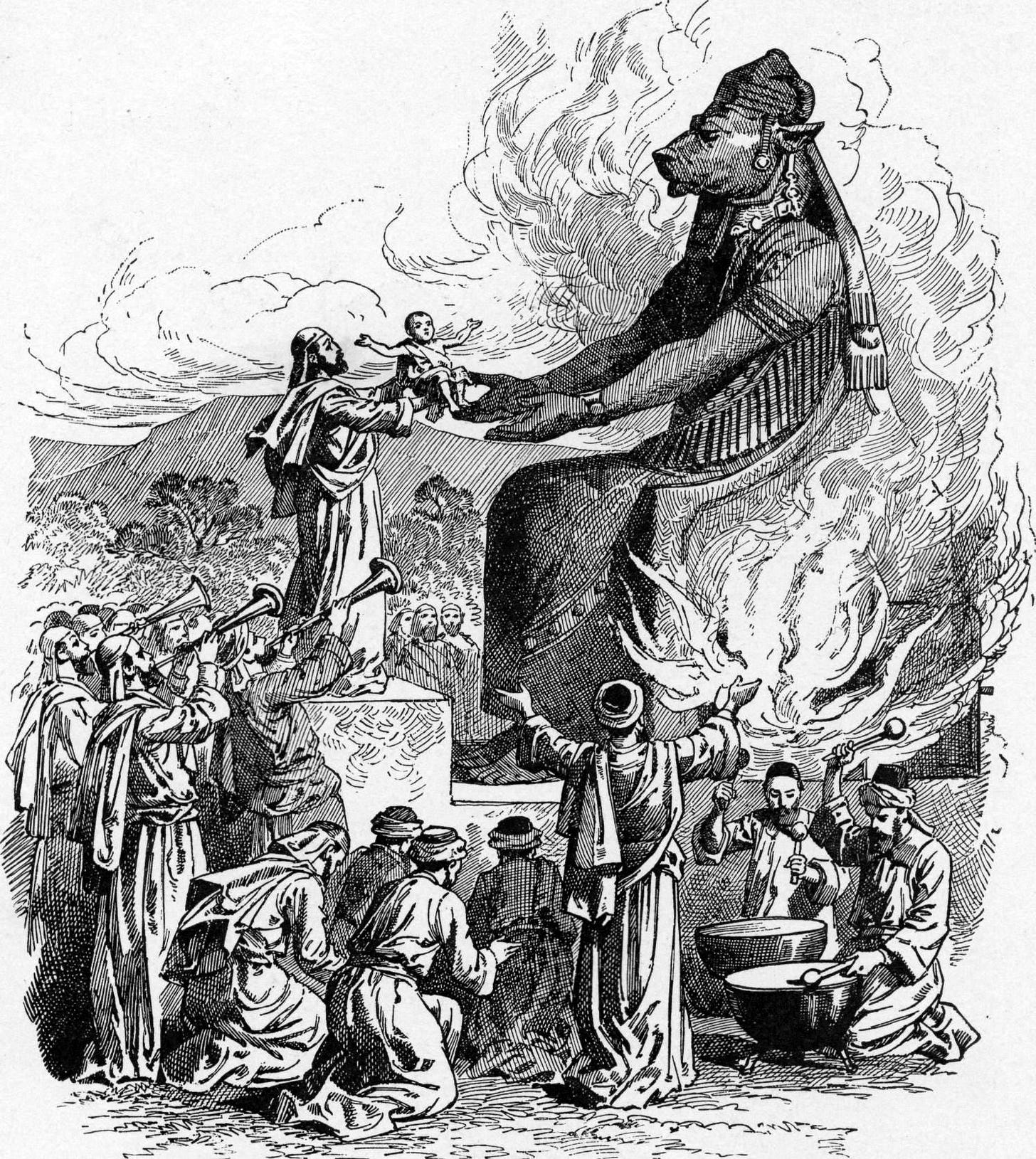
Moloch, usually portrayed as a bull-headed God, was a deity in Canaanite and Phoenician traditions. He required human sacrifices, to be specific, the sacrifice of an infant or a child.
‘’And thou shalt not let any of thy seed pass through the fire to Moloch, neither shalt thou profane the name of thy God: I am the Lord.’’ (Leviticus 18:21)
Again, the sources on the origin of Moloch seem to be an unending rabbit hole. The Carthaginians (Phoenician empire) did indeed sacrifice children by burning them for their God Baal. Moloch is sometimes interpreted as not a deity himself but a name for this type of sacrifice to Baal. These theories are controversial, and there is still not enough evidence on the existence of these sacrifices and the purposes behind them.
In his retelling of Genesis through an epic poem, John Milton (Paradise Lost) describes Moloch as a horrid king who is besmeared with the blood of children and the tears of their parents. A horrible picture to imagine.
‘”First, Moloch, horrid king, besmeared with blood
Of human sacrifice, and parents’ tears;
Though, for the noise of drums and timbrels loud,
Their children’s cries unheard that passed through fire”
Paradise Lost, John Milton
Literature and the Bible
Republic – Plato
While I was reading The Republic, something stood out to me. In Ancient Greece, a festival of Thargelia was held (to praise Apollo and Artemis), where there was also a need for the purification of the city through a scapegoat. However, this scapegoat was not a goat at all, but a human being. Once a year or during certain difficult moments (famine, disasters, or war), the ugliest two citizens (male and female) were chosen and forced to fulfil this role. Some sources say that they were banned from the city in a forced exile. Others paint a more sinister picture; the chosen victims (called Pharmakoi) were stoned to death by their fellow citizens.
It is unlikely that either Socrates or Plato had knowledge of the Biblical scrolls or the Israelites/Canaanites’ religions and traditions. Thus, their festival’s pharmakoi had nothing to do with the scapegoat during the Day of Atonement, but the idea behind this practice has some similarities.
In July, we continue the read-along with reading the fourth book of the Pentateuch: Numbers. Good luck, and until next month.
References
- The Authorized King James Bible, Oxford University Press
- A History of the Bible by John Barton, Penguin Classics edition
- The Penguin Book of Demons by Scott G. Bruce
- Wikipedia



Discover more from MariaTheMillennial
Subscribe to get the latest posts sent to your email.
 MariaTheMillennial