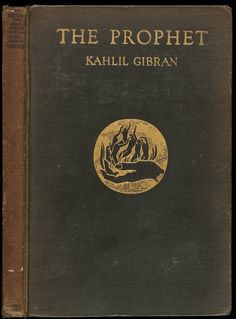
This review is part of the Year of Rereading Book Club. In 2026, we will (re)read modern classics and reflect on them in the comments. If you like to participate, check out the schedule and just start reading. If you have a StoryGraph account, you can find the reading challenge here.
The first month of the year is already far behind us, and I’m a bit late on writing this article; my apologies. But I think we made a good start with reading The Prophet by Kahlil Gibran. Most people love to make resolutions for the new year and are usually still motivated in January. Reading The Prophet’s advice on life is a good way of keeping that motivation for the rest of the year. I even decided to reread The Prophet every year in January from now on. But why should we reread books? Because…
“Only repetition reaches the heart” – Byung-Chul Han (Non-things)
And that is exactly what happened to me during this reread. Only now, I have noticed how many things I had missed the first time reading Gibran’s work. The bonus book for this month was his other short work of fiction called The Broken Wings. Both works are beautifully poetic, spiritual, and perfect for thinking and reflection. Another thing these books have in common is that they show a part of Gibran’s personal life. Kahlil Gibran (1883-1931), born in Lebanon, had to immigrate to America as a young boy due to a political shift in his country and his father’s financial problems. His mother took him and his siblings and moved to Boston. Needless to say, this has had a great impact on his life and later on his fiction. The protagonist in The Prophet has waited a long time to return to his origins. When the ship finally arrives to take him back, he is still sad to leave the country that he has lived in for many years. The Broken Wings, on the other hand, starts with describing the beautiful landscape and nature of Lebanon, probably a picture that has never left Gibran’s mind. For him, no country could compare to that image.
“Spring is beautiful everywhere, but it is most beautiful in Lebanon. It is a spirit that roams round the earth but hovers over Lebanon, conversing with kings and prophets, singing with the rivers the songs of Solomon, and repeating with the Holy Cedars of Lebanon the memory of ancient glory.” – The Broken Wings, Kahlil Gibran
Nature, theology, and mysticism are reappearing themes in Gibran’s work. The protagonist in The Prophet lived surrounded by nature, rejecting the comfort of a house and the advantages of a society. He observed his fellow citizens and contemplated life throughout his years living beside them. When it was finally time to return home to his origins, he was asked by the people to give his last advice. Even though this book is a work of fiction, it reads like a spiritual guide for the good life. It reminds me a bit of the Dao De Jing, but it is more straightforward and less mysterious. Various subjects of life are discussed: love, parenting, religion, and the unavoidable death. The text feels timeless; it applies to any generation and remains valuable wherever you are in your life.
A couple of years ago, when I read The Prophet for the first time, I was in a different phase of life than I am now. I had no children, I was starting with my master’s degree program and living in the chaos left behind by the pandemic. Different things stood out to me then than they do now. Yet, advice on parenting, religion, and trying to live a good life always remained inspirational to me.
“Your children are not your children. They are the sons and daughters of Life’s longing for itself. They come through you but not from you. And though they are with you yet they belong not to you.” – The Prophet
Gibran suggests that we are the guides of children in this world, not their masters, because one cannot possess another human’s life, only interact with it. We do possess our own life; the ordinary daily choices we make are just as important as the great ones. “Your daily life is your temple and your religion”. Numerous people can make the right decision in a crisis and even become a hero; however, being good to yourself and others every day during your life is difficult to achieve. Good deeds should come from the heart, unasked and without hoping for something in return.
“It is well to give when asked, but it is better to give unasked, through understanding”. – The Prophet
Furthermore, we do not decide who is deserving of our help and gifts, because nature does not discriminate either. The sun burns for everyone, no matter whether one deserves it or not. Demanding from a person an explanation for their misfortune, making them beg for help, is probably even worse than not giving at all.
While reading The Prophet, you will find other passages that will apply to your life, maybe better than the ones I picked, and you will not leave this work empty-handed. I believe there is something in it for everyone. On the other hand, The Broken Wings is one of the saddest stories that I have ever read. In the beginning, one could miss the hidden pain due to the flowery language, but in the end, it is impossible to escape the dooming misery of the main characters. Briefly, it could be called a love story, but that would be selling it short. It is a harsh and deep critique of power abuse and the societal repression of women. The main character falls in love with a beautiful young woman, and even though the love is mutual between them, he soon has to accept that their future together has been stolen by greed. Pressure from abused power has coerced her father into marrying her off to someone else, someone who does not even want her but treats her only as an object, a means to his own ends. She represents countless women who were forced into a loveless and abusive marriage, who were silenced and treated inhumanely. “A woman is to a nation as light is to a lamp“. Yet our society, in the past and present, is pressed on keeping that light dim.
I would recommend both books to anyone who wants to explore Gibran’s writing. However, be warned when reading these works that The Prophet is meant to raise your spirit through guidance, but The Broken Wings will crush you in the end through sorrow.


Discover more from MariaTheMillennial
Subscribe to get the latest posts sent to your email.
 MariaTheMillennial
Leave a comment