
Ready or not but 2025 has come. So it is time to reflect on the books that I read last year. 2024 has been a good reading year for me; I enjoyed most of the books, so choosing my favorites is a challenge. However, some books were a bit more exceptional than others because they were thought-provoking or contained new insights. Those made the list of favorites and are more likely to be reread in the future.
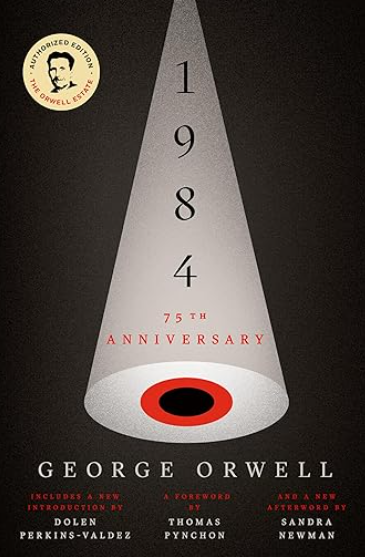
1. 1984 by George Orwell
I will start with the best one: 1984 by Orwell. I think that I would never read something by Orwell and dislike it, Animal Farm and his essays on writing have been amazing and 1984 is yet another perfect book. Orwell has officially entered my favorite authors list. This book has been an inspiration for many other dystopian novels, movies, and shows. Almost everyone is familiar with the term Big Brother but not everyone has read the book. If you haven’t read it though, you should! No other novel explains so clearly well what is wrong with politics. It has been banned in many countries and is still sometimes considered controversial even in the 21st century. If you have to put one book on your reading list for 2025, it should be this one.
The story follows Winston Smith, a clerk working for the Ministry of Truth which is concerned with lies. Slowly he starts to pacifly rebel against the regime by revisiting the past through old objects and thoughts. His rebellion becomes active through acts of reading, writing, and finding a companion. Does he have a chance of changing the future? And how is it possible that such a totalitarian system came into being? Orwell’s knowledge of politics and philosophy makes this novel more than just a dystopian story. While reading, you soon start to realize that you might be living in such a society already or are heading that way.
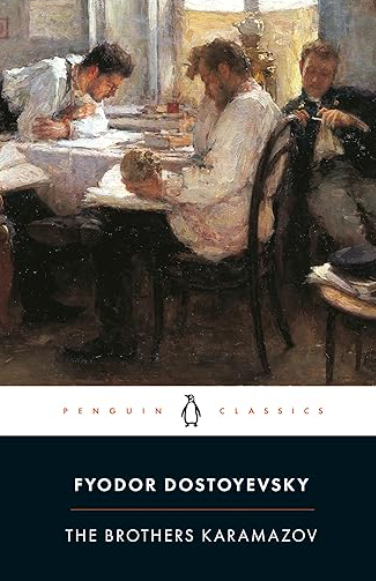
2. The Brothers Karamazov by Dostoevsky
Another philosophical work and a famous classic. This is the third novel by Dostoevsky that I have read and so far it is my favorite one. It took me more than a year to read (in its original language Russian) but it was a great experience. The story is about three brothers and their dead-beat father, told mostly through the perspective of the youngest brother Alyosha. Alyosha is the glue of the family, desperately trying to save his brothers from committing a crime while struggling with his own faith in God. The oldest brother, Dimitri, is impulsive, just like his father, but he has a hard time acknowledging this and moving beyond his anger. And lastly, there is the middle child, Ivan, who is determined to prove the absence of God and faith. There are many other side stories and characters that make the whole experience of reading about the lives of these brothers deeper.
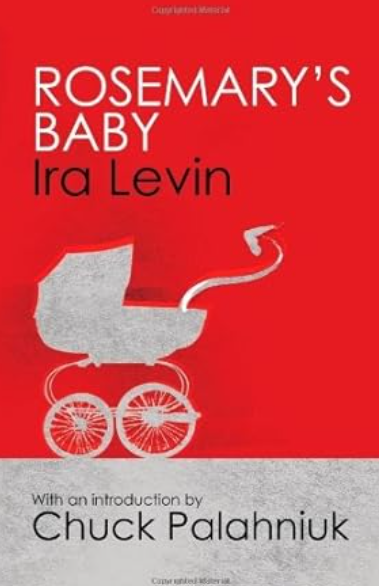
3. Rosemary’s Baby by Ira Levin
A horror cult classic that I wanted to read for a long time. I loved this book. It could have been a perfect book if it had a different ending. The atmosphere of the novel is just right for making you feel trapped in a house surrounded by strange neighbors and the occult. I found Rosemary a bit too passive, too accepting of her faith and the way her husband treated her. This resulted in an increased feeling of hopelessness for her situation. The Bramford building is an excellent example of using houses in horror beyond the ghosts and demons trope. It is the house itself that attracts the wrong people and feeds on the innocent. Click here for my review of the book.
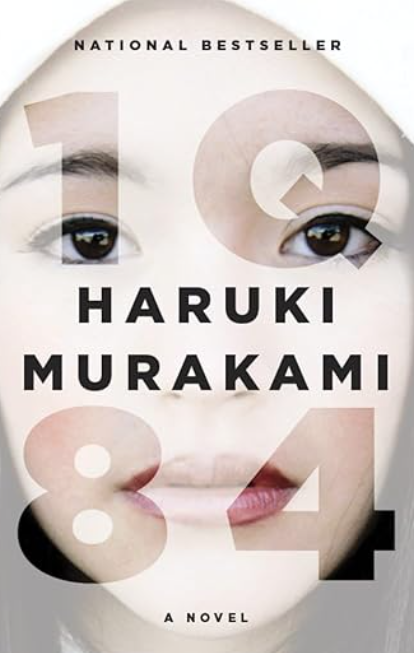
4. 1Q84 by Haruki Murakami
Both 1Q84 and The Brothers Karamazov have been major accomplishments for me this year. I had never read such long books before, and it took me some time to get through them. Except from being long, 1Q84 is also an unforgettable novel. It is usually marketed as sci-fi, magical realism, and literary fiction. But most of all I found it a good love story; the kind of weird romance that I like to read. Two people destined for each other without knowing about it, burdened with saving the world (or not?) while dealing with traumas from their past. 1Q84 is obviously a reference to 1984 but it is not as 1984. The novel contains many references to great literature and classics. The story is original and is not really dealing with a dystopian world. The characters are lovable, have interesting backgrounds, and reveal more information about themselves with every chapter which makes the long book exciting to read. The only thing that I did not appreciate is how absurdly often Murakami mentions breasts (or the lack of them) in the story; almost in every chapter without necessity or valid context. That was just weird.
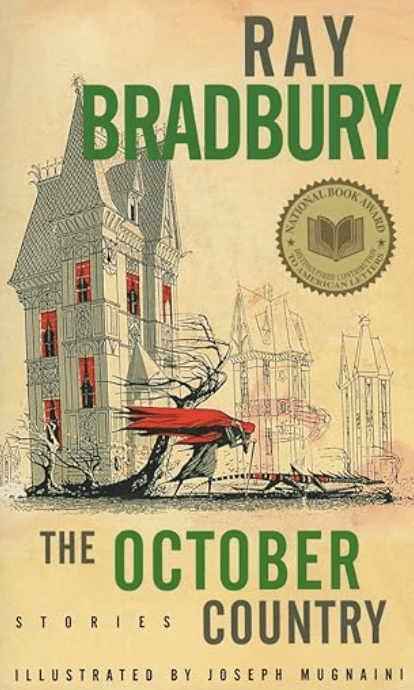
5. The October Country by Ray Bradbury
You can never go wrong with Bradbury, so far, I have liked everything that I read from him. This is an autumnal theme short story collection. All stories take place or have a reference to autumn, October, or Halloween. Beautiful descriptions of landscapes and nature, eerie mythologies, and funny characters are all part of Bradbury’s literary world.
These were my top five. However, I have also two honorable mentions to share. The first is Mrs. Dalloway by Virginia Woolf, such a complexly built novel about only one day in the life of Clarissa. Clarissa is a well-mannered lady, a member of the high and rich society of London. On the particular day that we find her in the story, she is busy with arranging everything for her party. In the meantime, we meet various other people from her environment and encounter their thoughts about her, about others, and about their own lives. The whole book is one big strain of thought. Woolf has a talent for messing with time and quickly changing the narrative. I like that about her writing but it also makes the book energy-consuming and requires your full attention.
The second book also manipulates time and presence a little bit and discusses the concepts of identity, language, and culture in the context of migration. Yuri Herrera describes in his novel Signs Preceding the End of the World how migration not only affects the migrating person but also his family, friends, and surroundings. A young Mexican girl is sent by her mother to illegally cross the US border, find her brother, and bring him back. Herrara explicitly plays with language; manipulates it to show the changing contexts and cultures. I read this book after reading Iliac Crest by Cristina Rivera Garza which is also part of migration literature and deals with the concept of borders and belonging. Both novels are strange in their own way and complement each other. I had found Iliac Crest difficult to understand but after reading Herrera’s book, some pieces fell into their place.
Lastly, I read some great works of non-fiction this year. Besides philosophy, I like to read non-fiction on various historical themes (usually ones with a dark twist).
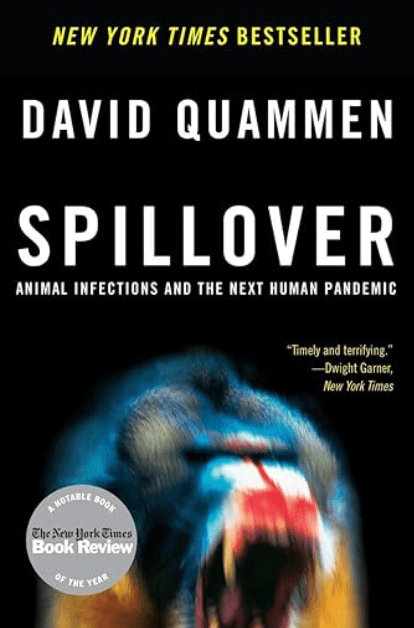
Spillover by David Quammen
The perfect book for learning more about infectious diseases, epidemiology, and medical science in general. It actually reads as a thriller! David Quammen has gone on many adventures to make this book possible. Engaging, suspenseful, and informative!

The Immortal Life of Henrietta Lacks by Rebecca Skloot
This is a biography of Henrietta Lacks and her family. Never heard about her? You should have. Much of the biomedical research, that brought us our current medical system, could only have advanced this far because of her. Especially in the medical fields of oncology, infectious diseases, and pharmacology (too many others to list here). Henrietta Lacks was an oncology patient at Johns Hopkins Hospital. She never knew that her cells were extracted during her treatment and used for research. They turned out to be extraordinary and very valuable, resulting in various scientific discoveries but also in many profits. But behind these cells, there is a woman, a mother, and a loved family member who was robbed of her privacy.
Rebecca Skloot does an excellent job of painting the background, researching the facts, and actually focusing on the people involved instead of ignoring and using them. The book is excellent for everyone who wants to learn more about science, medicine, and ethics.
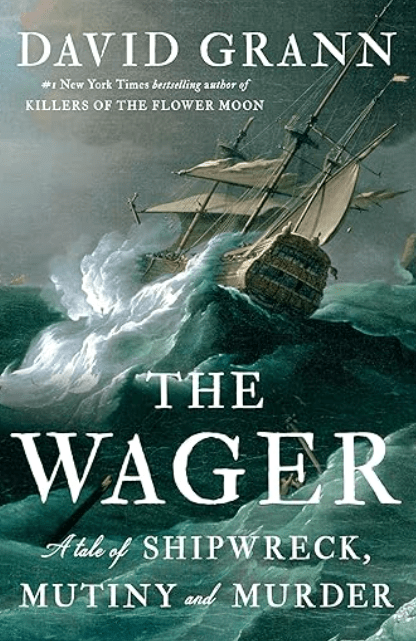
The Wager: A Tale of Shipwreck, Mutiny and Murder by David Grann
This also well-researched work of non-fiction is outside of the scope of medicine and science (even though it does occasionally mention some infectious diseases). Instead, it focuses on seas, oceans, and ships. I never knew much about ships and sea voyages, especially in the time of the 18th century. So this book was filled with lots of new information and terminology to me, however, Grann explains everything clearly and in detail without making it boring or too complex. The Wager Mutiny is an interesting but also dark part of George Anson’s voyage around the world in 1740. If you never read about the horror of living and working on a ship at that time, you will be shocked and amazed by Grann’s descriptions based on shipmen’s logbooks, diaries, and other archived materials.
If you have read some of these books, let me know what your thoughts are. I hope that 2025 will be just as good, or even better, reading year as 2024 was.

Discover more from MariaTheMillennial
Subscribe to get the latest posts sent to your email.
 MariaTheMillennial
Love your readings of 2024 keep it up for 2025!
LikeLike